
 This is a guest post written by Rachel Giles, President of VHL Europa
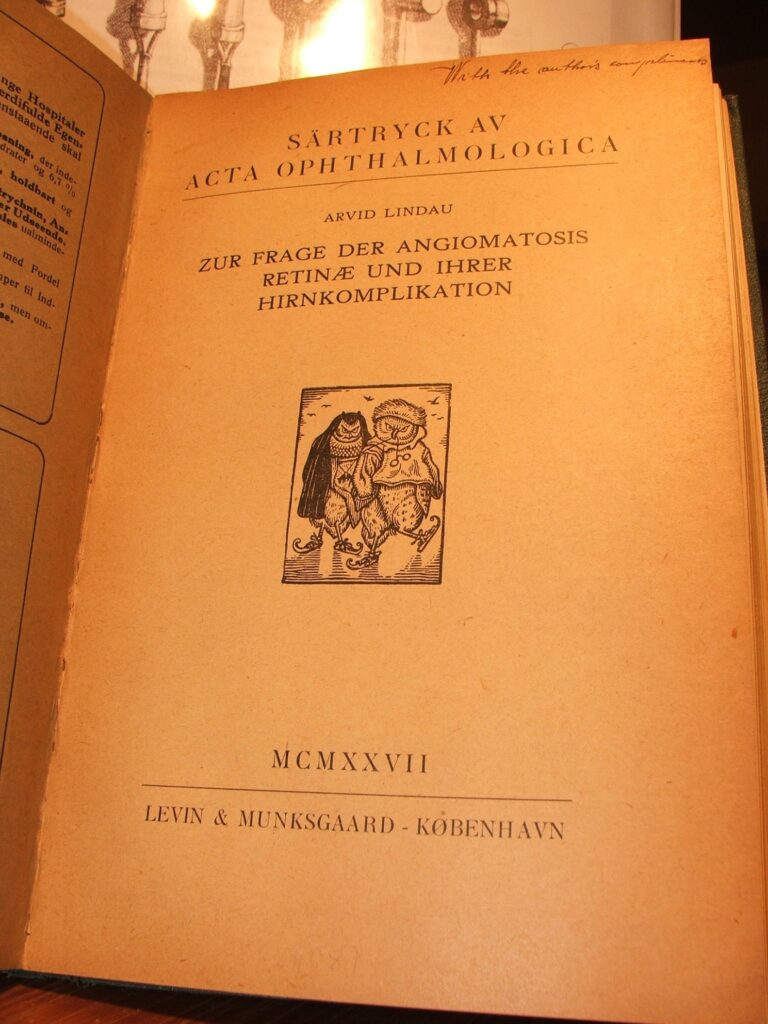
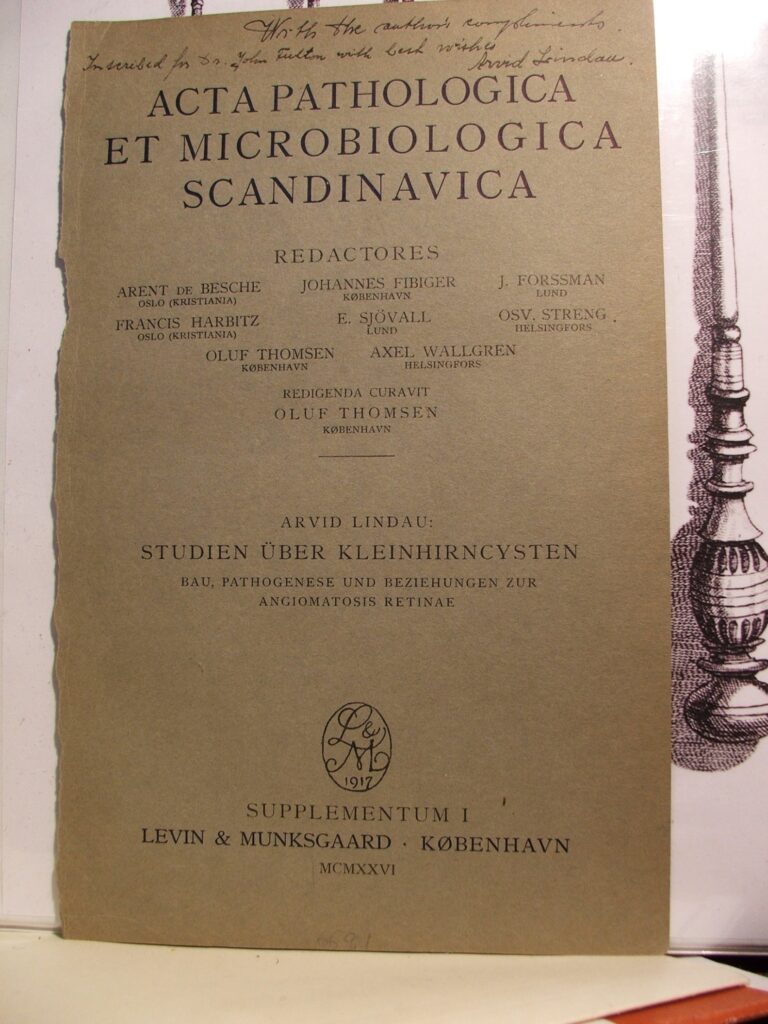
This year marks something extraordinary for our community. It has been 100 years since Arvid Lindau’s 1926 work helped connect the dots between the eye findings described by Eugen von Hippel and the broader syndrome we now know as VHL, named after these doctors. In other words, 2026 is not just an anniversary for a paper. It is an anniversary for the moment VHL started to become understandable as a whole disease rather than a collection of baffling, disconnected problems.
If you live with VHL, that milestone can feel both huge and oddly personal. Huge, because a century of research is a long time. Personal, because for most of us VHL is not a chapter in a medical textbook. It is scans, appointments, surgery planning, waiting for results, family conversations, and the strange skill of being able to discuss tumors over coffee as if that is a totally normal Tuesday.
 So what does 100 years of research actually mean?
It means that people living with VHL today are not where patients were 100 years ago, or 50 years ago, or even 15 years ago. Researchers helped turn VHL from a mystery into a genetic condition with a known cause. They helped explain why one altered VHL gene can lead to such a distinctive pattern of tumors and cysts in different organs. They helped build the surveillance strategies that so many of us rely on, even if we do sometimes joke that our social calendar is organized by MRI slots. Research is the reason VHL care is now built around earlier detection, monitoring, and more informed timing of intervention rather than guesswork and crisis management. Speaking of research, we would greatly appreciate it if you would fill in our global VHL patient survey (choose your language upper right): https://ec.europa.eu/eusurvey/runner/d36f4222-8b69-6288-3b64-e135c25d26d2
It also means that VHL research has mattered far beyond VHL. Work on the VHL gene and the oxygen-sensing pathway became central to understanding how cells respond to oxygen levels, which in turn helped shape major advances in cancer biology. That body of work was recognized with the 2019 Nobel Prize in Physiology or Medicine for discoveries about how cells sense and adapt to oxygen availability. For a rare disease community, that is no small thing. It means that VHL has not only benefited from science. VHL has helped drive science forward for everyone.
And then there is the part that feels especially meaningful for patients and families. Research has not only given us explanations. It has started to give us options. One example is belzutifan, a therapy linked directly to advances in understanding the HIF pathway in VHL biology. The FDA approved belzutifan in 2021 for certain tumors associated with VHL disease, which is something our community would once have struggled to imagine. It does not make VHL simple. It does not erase the need for expert care or careful follow-up. But it is a powerful reminder that basic science, patient participation, clinical trials, and persistence can eventually lead to something tangible in the clinic.
I think that is one of the biggest lessons of this centenary. Research is not abstract. It is not only for labs, conferences, and journal articles. Research is what gives us better imaging, better surgery timing, better understanding of risk, better family counseling, and sometimes, finally, better treatment choices. It is also what gives us language. A name for what is happening. A reason. A mechanism. A way to explain VHL to a new doctor without feeling like we are handing over a detective novel with half the pages missing.
Of course, a hundred years of research does not mean the work is finished. I do not think anyone in the VHL community would pretend that. We still live with uncertainty.
We still need better treatments, better access, better coordination of care, and better support for the emotional side of all this.
We still need research that looks not only at tumors, but at quality of life, hearing, vision, anxiety, family planning, and the long-term burden of living under lifelong surveillance.
We need science that respects the full reality of VHL life.
But anniversaries are for perspective, and this one deserves to be felt. A hundred years ago, VHL was being described. Today, it is being tracked, modeled, monitored, treated, and understood at a molecular level that earlier generations could not have dreamed of. That progress did not happen by accident. It happened because researchers kept asking questions, clinicians kept learning, families kept showing up, and patients kept participating, often while carrying far more than anyone outside the community fully sees.
So this year, I hope we celebrate research with gratitude and with honesty. Gratitude for the people who have dedicated their careers to understanding VHL. Honesty about how much more still needs to be done. And maybe a little pride, too, because this community has helped shape that progress every step of the way.
One hundred years on, VHL research is not just history. It is the reason there is more hope, more knowledge, and more possibility in front of us than behind us.
This content is brought to you with support from: