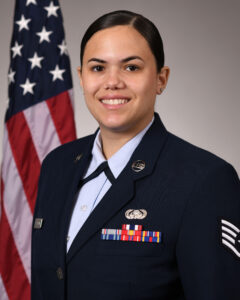
 Krystal LaSalle, U.S. Air Force
Krystal joined the Air Force straight out of high school. She’d been in AFJROTC and liked it enough that she swore into the Delayed Entry Program months before she graduated. A few months after that she was at basic training. She spent almost eight years in cyber security.
She was diagnosed with VHL at 22, three years into her service. “The military completely took care of testing me for VHL,” she says. They also gave her information about the VHL Alliance and told her about the closest Clinical Care Center, in Houston. She had a partial nephrectomy on each kidney, went back to her duties, and kept up her care while she worked. When her symptoms got worse, she was medically retired, a little short of eight years in.
 Because of her job, she didn’t travel much. “We were deployed in place,” she says. The trip she remembers most was a medical TDY to MD Anderson in Houston. “That was a very important part of my military career, because I felt taken care of. The Air Force ensured I was treated by the correct specialist for my condition, and that was such a morale boost for me during those scary times.”
Asked about her favorite part of serving, she doesn’t hesitate: the camaraderie. “I met amazing people.”
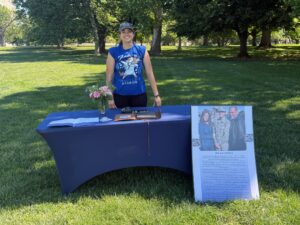
The Alliance recognized Krystal at the VHL Awareness Walk this past May. “It was an honor to recognize Krystal’s service and her selfless dedication to her country and fellow Americans,” said Janet Thompson, CDR, USNR (Ret.), VHLA’s Executive Director. “Even with the added challenges that come with managing a complex condition like VHL, SSgt LaSalle continued her duty with pride and professionalism. She represents the best of us.”
 Doug Karle, U.S. Army
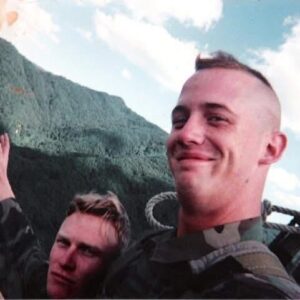
Doug joined the Army in 1991 and spent four years on active duty, at posts around the country and 19 months overseas. After that he did four more years in the Minnesota National Guard, in the infantry.
He was diagnosed with VHL in 2015. He’s a patient, and he’s also a caregiver: his son, now in high school, has VHL too.
In the years since his diagnosis Doug has put a lot of time into advocacy. He served on the VHL Alliance board and chaired it. He has been a consumer reviewer for the Congressionally Directed Medical Research Programs five times, which means sitting on a panel with scientists and weighing in on which research proposals get funded. And since 2019 he has gone to Capitol Hill to talk with members of Congress about what it’s like to live with a rare disease. For the last two years his son has gone with him.
Doug says his experience as a veteran, a patient and a parent shapes how he approaches that work. He wants the people making decisions about research and policy to hear from the people those decisions affect.
 David Randall, U.S. Navy
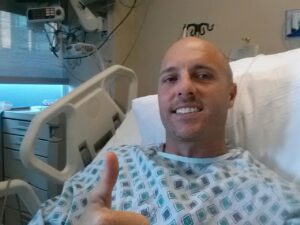
David is from Ohio and lives in Florida now. VHL runs in his family. He inherited it from his father, and his brother and nephew have it as well. He was diagnosed in 1995.
While he was in the Navy, David was treated at Walter Reed. His neurosurgeon there sent him to the National Institutes of Health, which already had a protocol for treating VHL. He was followed at the NIH for many years by Dr. Russell Lonser, who is now at the Ohio State University. Today, he receives his VHL care at Moffitt Cancer Center in Tampa.